Tuesday, August 19, 2008

A Matthew Henry Moment


And when the morning arose, then the angels hastened Lot, saying, Arise, take thy wife, and thy two daughters, which are here; lest thou be consumed in the iniquity of the city. And while he lingered, the men laid hold upon his hand, and upon the hand of his wife, and upon the hand of his two daughters; the Lord being merciful unto him: and they brought him forth, and set him without the city. And it came to pass, when they had brought them forth abroad, that he said, Escape for thy life; look not behind thee, neither stay thou in all the plain; escape to the mountain, lest thou be consumed. ~Genesis XIX, 15-17


Observe,

1. With what a gracious violence Lot was brought out of Sodom, v. 16. It seems, though he did not make a jest of the warning given, as his sons-in-law did, yet he lingered, he trifled, he did not make so much haste as the case required. Thus many that are under some convictions about the misery of their spiritual state, and the necessity of a change, yet defer that needful work, and foolishly linger. Lot did so, and it might have been fatal to him it the angels had not laid hold of his hand, and brought him forth, and saved him with fear, Jude 23. Herein it is said, The Lord was merciful to him; otherwise he might justly have left him to perish, since he was so loth to depart. Note, (1.) The salvation of the most righteous men must be attributed to God's mercy, not to their own merit. We are saved by grace. (2.) God's power also must be acknowledged in the bringing of souls out of a sinful state. If God had not brought us forth, we had never come forth. (3.) If God had not been merciful to us, our lingering had been our ruin.

2. With what a gracious vehemence he was urged to make the best of his way, when he was brought forth, v. 17. (1.) He must still apprehend himself in danger of being consumed, and be quickened by the law of self-preservation to flee for his life. Note, A holy fear and trembling are found necessary to the working out of our salvation. (2.) He must therefore mind his business with the utmost care and diligence. He must not hanker after Sodom: Look not behind thee. He must not loiter by the way: Stay not in the plain; for it would all be made one dead sea. He must not take up short of the place of refuge appointed him: Escape to the mountain. Such as these are the commands given to those who through grace are delivered out of a sinful state. [1.] Return not to sin and Satan, for that is looking back to Sodom. [2.] Rest not in self and the world, for that is staying in the plain. And, [3.] Reach towards Christ and heaven, for that is escaping to the mountain, short of which we must not take up.

Monday, August 18, 2008

Some Newer Work


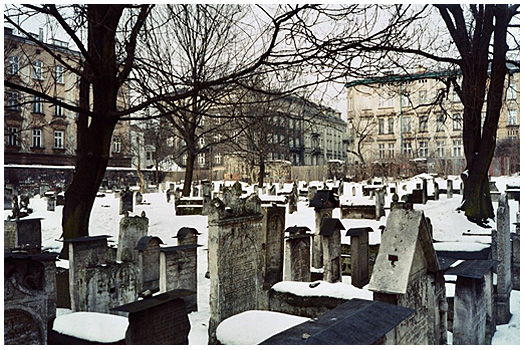
Some of my favorites from this summer. I need to post more photos.


2008

Book Review - 'The Cross'


The Cross: God’s Way of Salvation
Martyn Lloyd-Jones, Crossway Books, 1986, 224 pages, $12 (paperback)


Few books have impacted me emotionally as “The Cross” by D. Martin Lloyd-Jones. The first 100 pages flew by me late one Wednesday night leaving behind a small, broken man on the floor crying out in worship and thanksgiving. Page by page Mr. Lloyd-Jones, like a jeweler examining a diamond in the light, shows the reader different beautiful facets of the cross – that antinomy of the terrible and beautiful together. In this brief outline, I’ve decided to let Lloyd-Jones’ own words do most of the work to show the beauty and message of this book.

The book begins by explaining that the cross is what the apostles gloried in, and how Jesus’ life and teaching make no sense preached apart from the shadow of the cross.

“Now at the risk of being misunderstood I will put it like this: It is not primarily the teaching of our Lord. I say that, of course, because there are so many today who think that this is Christianity. They say, ‘What we need is Jesus’ teaching. He is the greatest religious genius of all times. He is above all philosophers. Let us have a look at His teaching, at the Sermon on the Mount and so on. That is what we want.’ ‘What the world needs today,’ they say, ‘is a dose of the Sermon on the Mount; a does of his ethical teaching. We must preach this to people and teach them how to live.” But according to the apostle, Paul, this is not their first need. And I will go further. If you only preach the teaching of the Lord Jesus Christ, not only do you not solve the problem of mankind, but in a sense you aggravate it. You are preaching nothing but utter condemnation, because nobody can ever carry it out. So they did not preach His teaching. Paul does not say, ‘God forbid that I should glory, save in the Sermon on the Mount’ or ‘God forbid that I should glory save in the ethical teaching of Jesus’. He does not say that. It was not the teaching of Christ, nor the example of Christ either. What they preached was His death on the cross and the meaning of that event.” pp. 20-21


We see in Proverbs 17:15 that anyone who justifies a wicked man is an abomination to God, but later in Romans 4:5 we find Paul glorying that God has done that very thing – justified the wicked! How do we unlock these two contradictory statements? The cross is the key. A large and wonderful portion of this work is dedicated to the question posed to Spurgeon’s listeners 100 years prior, ‘How can a holy and just God forgive sinners without becoming an abomination to Himself?’

“No, we do not understand the righteousness of God. That is why modern man does not believe in the blood of the cross. He does not know what righteousness is. He does not know what justice is or what law is. He does not believe in discipline, and his world is becoming a hell for that reason. But God is righteous, he is the law giver, he is holy, he is of so pure a countenance that he cannot even look upon sin; and God cannot pretend that he has not seen it. God sees sin. He sees everything. He must punish sin. His own holy nature insists upon it and he has told us abundantly that he is going to do so. So here is the problem. Man is a guilty sinner, God is a holy God. How can the two be brought together? The answer is the cross of Christ.

…So what was happening on the cross was that God himself was laying your sins and mine upon his dearly beloved Son, and he paid the penalty of our guilt and our transgressions. “For he made him to be sin for us, who knew no sin; that we might be made the righteousness of God in him” (2Cor. 5:21). “The Lord has laid on him the iniquity of us all” (Isaiah 53:6). That is what the Father did. What did the son do? He was passive as a lamb, he did not grumble, he did not complain. He took it all upon him. He allowed it to happen. He surrendered himself deliberately and freely.

“Who gave himself for (on behalf of) our sins, that he might deliver us from this present evil world, according to the will of God and our Father” (Galatians 1:4). But still more wonderfully, in Galatians 2:20, “I am crucified with Christ: nevertheless I live; yet not I, but Christ lives in me: and the life which I now live in the flesh I live by the faith of the Son of God, who loved me, and gave himself for me.” pp. 32-33


The book is also a call for examination, echoing Paul’s own exhortation in 1st Cor. 13:5 to examine and test ourselves to make sure of our calling and election.

'The word 'glory' at once tells us at once that the cross of our Lord Jesus Christ is the test of every one of us. It is the test of our profession of Christianity. It is the test of our church membership, indeed, of our whole position and profession. There is no more subtle test of our understanding than our attitude to the cross of our Lord Jesus Christ. In other words, the cross passes judgment on us all, immediately and of necessity. You cannot remain neutral in the presence of the cross. It has always divided mankind and still does. And what the apostle says is that there are ultimately only two positions with respect to it. The cross of our Lord Jesus Christ is either an offense to us or else it is the thing above everything else in which we glory.

My dear friends, there never can be a more important question than this: what does the cross do to you? Where do you find yourself as you think of it and face it? It is one of these two, it is either an offense or else you glory in it. Are we all clear about our position? Do we know exactly where we stand? There are some perhaps saying, 'Well quite certainly it is not an offense, to me, but I am afraid I cannot say I glory in it.' Well, my friend, you are in an impossible position. There are only two positions - offense or glory. As we value our immortal souls, let us examine the matter, let us look into it, let us see what the apostle has got to tell us here, and elsewhere in his writings, about these two positions, in order that we may know for sure." pp. 41-42


The book goes on to discuss the power of the cross whereby it was (and is) the means of the devil’s defeat, the amazing regeneratory strength of the cross whereby filthy, vile sinners can have peace with God, and the infinite worth of the cross whereby the Son of God gave up his very communion with His Father to save those who hated him. At the same time, Lloyd-Jones glories in his admission that there is SO much more to that great cross than we will ever know.

Although considered one of the greatest preachers of the 20th century, surprisingly very few people outside the theological academy know of this great man and his writings. I am partial to think we can attribute this to peddling shallow, superficial and some down right worthless books in an attempt to simplify and “dumb down” truth in an effort to reach our increasingly dim church members. There are several deeply theological authors who are very readable and accessible to people of all walks of life, and Lloyd-Jones is one of them – Spurgeon also coming immediately to mind.

A concise work from a man not usually known for brevity (he has a 14 volume commentary on Romans!), I would (and will) recommend this book to all my friends, saved or lost. It’s a priceless work on the most important subject.

Wednesday, August 13, 2008

Piper Paints People-Pictures


Listening through these has been such a blessing to me in the past few weeks. I thoroughly recommend you burn a few of them and listen in your car or while doing some busy work. They are all very well done (save the MLJ one), but I especially hope you'll do some right-click save-as on this one, and this one, this one, and definitely this one. I've been very encouraged hearing about the lives, faith, doctrines and actions of these men. Praise the Lord for his faithfulness to raise up prophets in every generation.

Monday, July 21, 2008

On Sovereignty and Supremacy


A.W. Pink on God's Supremacy

"Of old, God complained to an apostate Israel, Thou thoughtest that I was altogether as thyself. (Ps. 50:21). Such must now be His indictment against an apostate Christendom. Men imagine that the Most High is moved by sentiment, rather than actuated by principle. They suppose that His omnipotency is such an idle fiction that Satan is thwarting His designs on every side. They think that if He has formed any plan or purpose at all, then it must be like theirs, constantly subject to change. They openly declare that whatever power He possesses must be restricted, lest He invade the citadel of man’s "free will" and reduce him to a "machine." They lower the all efficacious Atonement, which has actually redeemed everyone for whom it was made, to a mere "remedy," which sin-sick souls may use if they feel disposed to; and they enervate the invincible work of the Holy Spirit to an "offer" of the Gospel which sinners may accept or reject as they please.

The "god" of this twentieth century no more resembles the Supreme Sovereign of Holy Writ than does the dim flickering of a candle the glory of the midday sun. The "god" who is now talked about in the average pulpit, spoken of in the ordinary Sunday School, mentioned in much of the religious literature of the day, and preached in most of the so-called Bible Conferences is the figment of human imagination, an invention of maudlin sentimentality. The heathen outside of the pale of Christendom form "gods" out of wood and stone, while the millions of heathen inside Christendom manufacture a "god" out of their own carnal mind. In reality, they are but atheists, for there is no other possible alternative between an absolutely supreme God, and no God at all. A "god" whose will is resisted, whose designs are frustrated, whose purpose is checkmated, possesses no title to Deity, and so far from being a fit object of worship, merits nought but contempt."


C.H. Spurgeon on God's Sovereignty


"There is no attribute more comforting to His children than that of God's Sovereignty. Under the most adverse circumstances, in the most severe trials, they believe that Sovereignty has ordained their afflictions, that Sovereignty overrules them, and that Sovereignty will sanctify them all. There is nothing for which the children ought more earnestly to contend than the doctrine of the Master over all creation--the Kingship of God over all the works of His own hands--the Throne of God and His right to sit upon that Throne. On the other hand, there is no doctrine more hated by worldlings, no truth of which they have made such a football, as the great, stupendous, but yet most certain doctrine of the Sovereignty of the infinite Jehovah. Men will allow God to be everywhere except on His throne. They will allow Him to be in His workshop to fashion worlds and make stars. They will allow Him to be in His almonry to dispense His alms and bestow His bounties. They will allow Him to sustain the earth and bear up the pillars thereof, or light the lamps of heaven, or rule the waves of the ever-moving ocean; but when God ascends His throne, His creatures then gnash their teeth. And we proclaim an enthroned God, and His right to do as He will with His own, to dispose of His creatures as He thinks well, without consulting them in the matter; then it is that we are hissed and execrated, and then it is that men turn a deaf ear to us, for God on His throne is not the God preached. It is God upon His throne whom we trust."

Tuesday, July 15, 2008

Ironside answers the agnostic


This is taken from Boice's "Standing on the Rock", a book defending biblical inerrency, authority and sufficiency. The specific chapter was dealing with positive evidence for the bible - or why we can be assured that it is trustworthy. Besides the bibles amazing preservation over thousands of years, it's incredible unity though over 30 human authors were used, it's self-attestingness, and it's prophetic call and answers spanning hundreds of years, we can also look at the transforming power of the bible as an evidence for it's divine authorship. This anictdote taken from H.A. Ironside's life demonstrates the latter. And I'd be lying if it didn't make me chuckle.

-----

"Does the Bible actually transform men and women, turning them into godly persons? It does. Prostitutes have been reformed. Drunkards have become sober. Those filled with pride have become humble. Dishonest people have become people of integrity. Weak women and men have become strong, and all because of the transformation wrought in them by God as they have heard and studied the Scriptures.

A remarkable illustration comes from the life of Dr. Harry Ironside. Early in his ministry the great evangelist and Bible teacher was living in the San Francisco Bay area working with a group of believers called “Brethren”. One Sunday as he was walking through the city he came upon a group of Salvation Army workers holding a meeting on the corner of Market and Grant Avenues. There were probably sixty of them. When they recognized Ironside they immediately asked him if he would give his testimony. So he did, giving a word about how God had saved him through faith in the bodily death and literal resurrection of Jesus.

As he was speaking, Ironside noticed that on the edge of the crowd a well-dressed man had taken a card from his pocket and had written something on it. As Ironside finished his talk this man came forward, lifted his hat and very politely handed him the card. On one side was his name, which Ironside immediately recognized. The man was one of the early socialists who had made a name for himself, lecturing not only for socialism but also against Christianity. As Ironside turned the card over, he read, “Sir, I challenge you to debate with me the question ‘Agnosticism versus Christianity’ in the Academy of Science Hall next Sunday afternoon at 4 o’clock. I will pay all expenses.”

Ironside reread the card aloud and then replied somewhat like this. “I am very much interested in this challenge….Therefore I will be glad to agree to this debate on the following conditions: namely, that in order to prove Mr______ has something worth fighting for and worth debating about, he will promise to bring with him to the hall next Sunday two people, whose qualifications I will give in a moment, as proof that agnosticism is of real value in changing human lives and building true character.

“First he must promise to bring with him one man who was for years what we commonly call a ‘down-and-outer’. I am not particular as to the exact nature of the sins that had wrecked his life and made him an outcast from society - whether a drunkard, or a criminal of some kind, or a victim of his sensual appetite – but a man who for years was under the power of evil habits from which he could not deliver himself, but who on some occasion entered one of Mr._____’s meetings and heard his glorification of agnosticism and his denunciations of the Bible and Christianity, and whose heart and mind as he listened to such an address were so deeply stirred that he went away from that meeting saying, ‘Henceforth, I too am an agnostic!’ and as a result of imbibing that particular philosophy found that a new power had come into his life. The sins he once loved he now hates , and righteousness and goodness are now the ideals of his life. He is now an entirely new man, a credit to himself and an asset to society – all because he is an agnostic.

“Secondly, I would like Mr.______ to promise to bring with him one woman – and I think he may have more difficulty in finding the woman than the man – who was once a poor wretched, characterless outcast, the slave of evil passions, and the victim of man’s corrupt living……perhaps one who had for years lived in some evil resort…..utterly lost, ruined and wretched because of her life of sin. But this woman also entered a hall where Mr.______ was loudly proclaiming his agnosticism and ridiculing the message of the Holy Scriptures. As she listened, hope was born in her heart, and she said, ‘This is just what I need to deliver me from the slavery of sin!’ She followed the teaching and became an intelligent agnostic or infidel. As a result her whole being revolted against the degradation of the life she had been living. She fled from the den of iniquity where she had been held captive so long; and today, rehabilitated, she has won her way back to an honored position in society and is living a clean, virtuous, happy life – all because she is an agnostic.

“Now” he said, addressing the gentleman who had presented him with the card and the challenge, “if you will promise to bring these two people with you as examples of what agnosticism can do, I will promise to meet you at the Hall of Science at four o’clock next Sunday, and I will bring with me at the very least 100 men and women who for years lived in such sinful degradation as I have tried to depict, but who have been gloriously saved through believing the gospel which you ridicule. I will have these men and women with me on the platform as witnesses to the miraculous saving power of Jesus Christ and as present-day proof of the truth of the Bible.”

Dr. Ironside then turned to the Salvation Army captain, a woman, and said, “Have you any who could go with me to such a meeting?” She exclaimed with enthusiasm, “We can give you forty at least from just this one corps, and we will give you a brass band to lead the procession!”

“Fine,” Dr. Ironside answered. “Now, Mr.______, I will have no difficulty picking up sixty others from the various missions, gospel halls and evangelical churches of the city; and if you will promise faithfully to bring two such exhibits as I have described, I will come marching in at the head of such a procession, with the band playing, ‘Onward, Christian Soldiers’, and I will be ready for the debate.”

Apparently the man who had made the challenge must have had some sense of humor, for he smiled wryly and waved his hand in a deprecating sort of way as if to say, “Nothing doing” and then edged out of the crowd while the bystanders clapped for Ironside and the others.
The power of the living Christ operating by means of the Holy Spirit through the written Word changes lives. This has been true throughout history. It is a powerful proof that the Bible is indeed the Word of God
.”

Friday, July 11, 2008

Prayer


I really enjoyed that video. The concentric way of prayer and how we should be 'scripture-praying' were very encouraging to me. It also inspired me to set aside a particular area to pray in. Since I have no woods currently available, I opted to buy a little stool and place it in the corner of my study. By setting aside a particular place for praying, you avoid many distractions and remained focused on why you are there. I would encourage everyone to do the same. =)


----

Over the past six months God has really shown me the need, and given me the desire, to pray - and pray heavily, particularly in private prayer.

He has shown me my own inability to change myself and to rely on him for all my wisdom - 'To God, alone wise, be glory through Jesus Christ forever. Amen.' (Acts 16:27). Both Timothy, and Jude echo that same sentiment. But praise God, that God is not tightfisted with his wisdom, but will dispense it to us if we only humbly ask. As James tells us in his book, chapter one, verse five: 'If any of you lacks wisdom, let Him ask God, who gives generously to all without reproach, and it will be given him.' I am so deficient in every aspect of all good things, Lord, please help me.

Our Lord also prayed heavily - so much so that his disciples specifically asked him to teach them how to pray. (Luke 11:1) He would often go out for hours at a time, to a solitary place (Mark 1:35), to be in communion with God and find out the "...will of He who sent me." (John 8:29) He commands us to do the same in Matthew 6:6. What convicted me so greatly about the way Jesus prayed, was the realization that he had no sin to repent of. How much more should we always be in fervent prayer, we that have so much to repent of!

Are we actively seeking the will of God? Are we in a constantly repenting for our sins and asking God for wisdom and power to sanctify us? Are we taking advantage of the great peace and love that we have in communion with a God who is also our Father? Are we lifting up in intercession our family, friends, and the world? Are we consistently praising God for his blessings and giving him glory in our thanksgiving? Are we following our Lord's injunction to pray for our enemies and those that curse us? Or is prayer only a reality to us when we have some trivial want or need - a safety net, there to use just in case we screw things up too much on our own.

Prayer really does change things. Do we believe that? Let us redeem the time (Ephesians 5:16) and be found spending much time in prayer!

----

"Rejoice always, pray without ceasing, give thanks in all circumstances; for this is the will of God in Christ Jesus for you.' (1 Thessalonians 5:16-18)

"The effective, fervent prayer of a righteous man avails much." (James 5:16)

"The Lord is far from the wicked, but He hears the prayer of the righteous." (Proverbs 15:29)

"Those who know God the best are the richest and most powerful in prayer. Little acquaintance with God, and strangeness and coldness to Him, make prayer a rare and feeble thing." --E. M. Bounds

"Let the fires go out in the boiler room of the church and the place will still look smart and clean, but it will be cold. The Prayer Room is the boiler room for its spiritual life." --Leonard Ravenhill

"Notice, we never pray for folks we gossip about, and we never gossip about the folk for whom we pray! For prayer is a great deterrent." --Leonard Ravenhill

"The true spirit of prayer is no other than God's own Spirit dwelling in the hearts of the saints. And as this spirit comes from God, so doth it naturally tend to God in holy breathings and pantings. It naturally leads to God, to converse with him by prayer." --Jonathan Edwards

"No leaving can make up for the failure to pray. No earnestness, no diligence, no study, no gifts will supply its lack." -- E.M. Bounds

"Whole days and weeks have I spent prostrate on the ground in silent or vocal prayer." -- George Whitefield

“If any of you should ask me for an epitome of the Christian religion, I should say that it is in one word- Prayer. Live and die without prayer, and you will pray long enough when you get to hell.” --C.H. Spurgeon